China’s Growing Footprint in the Greater Maghreb
China has emerged as the largest trading partner of the Greater Maghreb, with bilateral trade surpassing $32 billion in 2024. This growing economic engagement underscores the region’s strategic importance at the crossroads of Africa, Europe, and the Middle East.
The Maghreb possesses significant comparative advantages:
• A strategic location linking major global markets.
• A young and skilled workforce capable of supporting rapid industrial expansion.
• Abundant natural resources that are highly critical to global supply chains.
Harnessing these strengths, however, requires far greater regional integration. Political unity among Maghreb states could significantly enhance their collective bargaining power, attract diversified foreign direct investment, and accelerate sustainable development.
The Algeria-Morocco Rivalry: A Barrier to Integration
Persistent political divisions remain a formidable barrier to realizing this economic potential. For the Maghreb to achieve sustainable growth and meaningful economic advancement, the protracted rivalry between Algeria and Morocco must be resolved. The persistence of this conflict has long constrained regional cooperation and systematically undermined collective economic progress.
Given the profound cultural, historical, and social commonalities shared by both nations, there is no structural impediment to transforming these deep affinities into mutually beneficial economic opportunities. A diplomatic rapprochement between Algeria and Morocco would not only enhance bilateral trade and investment but would also serve as a vital catalyst for broader Maghreb integration, thereby strengthening the entire region’s position in the global economy.
Key Policy Insight: Overcoming intra-regional disputes is essential for positioning the Maghreb as a cohesive, stable, and influential economic bloc—one that is fully capable of leveraging its partnerships with China, the United States, and other global superpowers.
The Maghreb’s Regional Scale and Strategic Potential
On a regional scale, the Greater Maghreb—comprising Algeria, Morocco, Tunisia, Libya, and Mauritania—boasts a combined population of approximately 105 million people and an estimated nominal GDP of $550 billion. This considerable demographic weight and economic foundation highlight the Maghreb’s potential to serve as both a robust regional market and a critical commercial bridge linking Africa, Europe, and the Middle East.
The U.S. Strategic Opportunity vs. The Chinese Reality
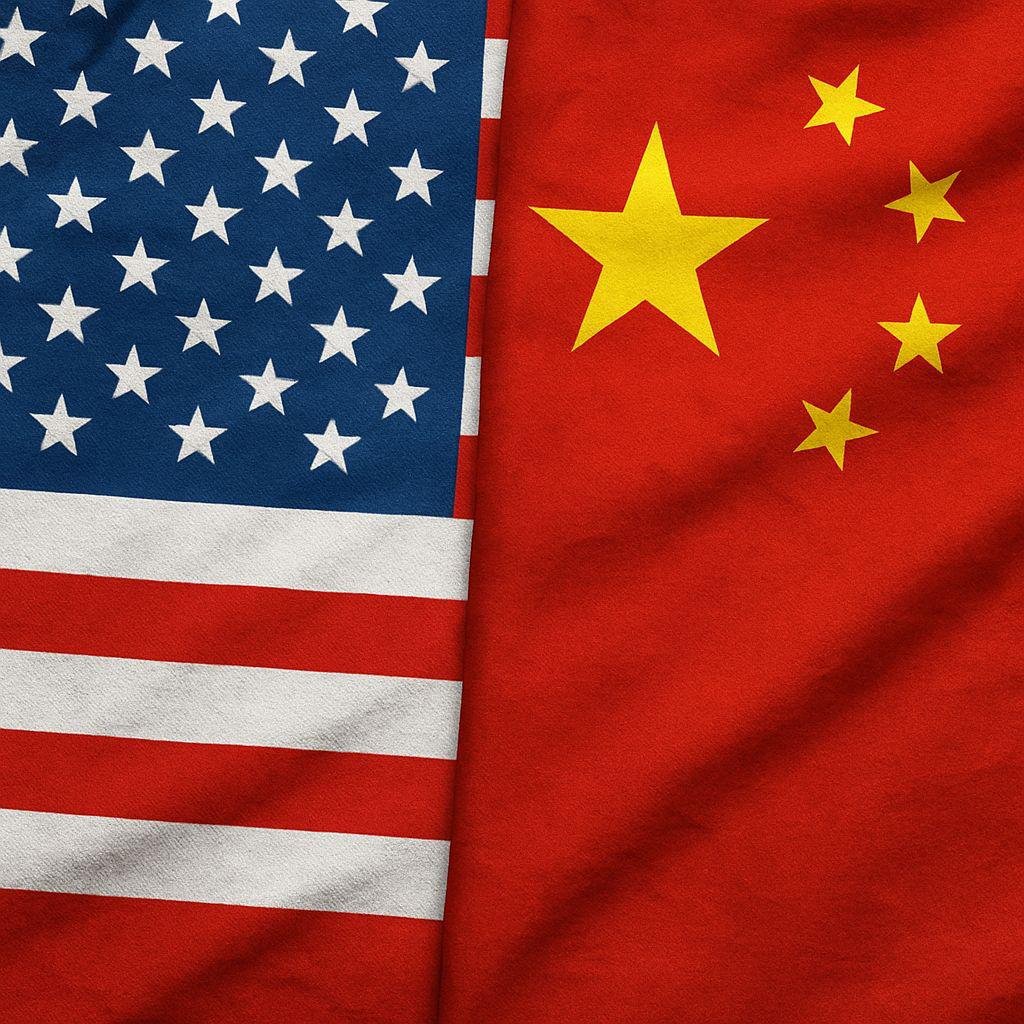
The United States stands to reap significant economic benefits if it actively supports Maghreb regional integration. A unified Maghreb would create a larger, more stable market for American goods and services, strengthen global supply chain diversification, and unlock new opportunities for energy cooperation and digital economy partnerships. By promoting this integration, Washington could effectively counterbalance China’s expanding influence while securing long-term commercial and strategic advantages for U.S. businesses along trade routes central to transatlantic commerce.
However, an analysis of current trade figures reveals a stark reality: Beijing has established a massive and rapidly growing economic presence in the region. In 2024, China’s bilateral trade with the Maghreb reached approximately $32.2 billion. This footprint is distributed broadly across the entire bloc, led by trade with Algeria ($12.5 billion), followed by Morocco ($9.04 billion), Libya ($4.75 billion), and Tunisia ($3.0 billion).
In contrast, total U.S. trade volume with the region stood at $17.16 billion—nearly half of China’s total. Furthermore, American trade is heavily lopsided, concentrated almost entirely in Morocco at $9.26 billion due to the bilateral Free Trade Agreement. U.S. trade with Algeria accounted for $3.9 billion, while Libya and Tunisia lagged behind at $2.0 billion each.
Capitalizing on Values and the Economic Question
At present, Morocco represents the only formalized U.S. trade agreement within the Maghreb, offering a successful model that could theoretically be extended across the rest of the bloc.
Strategically, the United States possesses a distinct cultural and political advantage over China. It enjoys broad acceptance among both the general population and the business community, and foundational American political values appear to resonate more strongly within the capitals of Rabat, Algiers, Tunis, Tripoli, and Nouakchott than the governance models projected by Beijing.
Yet, in international diplomacy, long-term alignment is ultimately dictated by sustained economic investments and market presence. The critical question moving forward concerns the extent to which Washington is willing to view the Maghreb as central to its long-term strategic objectives and back that view with real capital.